
What Does the Bible Really Say About Mohamed? Uncovering the Truth
What does the Bible say about Mohamed? This is a question that has been asked by many Christians and Muslims alike. While there are no direct references to Mohamed in the Bible, there are some passages that have been interpreted by some as referring to him. In this article, we will explore these passages and examine what they really mean. We will also look at Mohamed's life and teachings according to Islamic tradition and compare them with Christian beliefs about Jesus. Finally, we will address some common misconceptions about Mohamed and discuss how we can find common ground between Christians and Muslims.
Mohamed in the Bible
While there are no direct references to Mohamed in the Bible, some Christians have pointed to certain passages as evidence that he is mentioned indirectly. One of these passages is found in the Gospel of John, where Jesus says:
"But the Advocate, the Holy Spirit, whom the Father will send in my name, will teach you all things and will remind you of everything I have said to you."
- John 14:26
Some Christians interpret the "Advocate" mentioned here as a reference to Mohamed, who they believe was prophesied to come after Jesus. However, this interpretation is not widely accepted by mainstream Christian scholars.
Another passage that some Christians point to is found in the Gospel of Matthew, where Jesus says:
"Beware of false prophets, who come to you in sheep's clothing but inwardly are ravenous wolves."
- Matthew 7:15
Some Christians interpret this passage as a warning about Mohamed, whom they believe was a false prophet. However, this interpretation is also not widely accepted by mainstream Christian scholars.
Mohamed in Islamic Tradition
Mohamed is considered by Muslims to be the last prophet sent by God. He was born in Mecca in 570 CE and began receiving revelations from God at the age of 40. These revelations were later compiled into the Quran, which is considered by Muslims to be the word of God.
Mohamed's teachings emphasized the oneness of God and the importance of living a moral and ethical life. He also taught that all people are equal in the eyes of God, regardless of their race or social status. Mohamed's teachings have had a profound impact on the world, shaping the beliefs and practices of over a billion Muslims worldwide.
While there are some similarities between Islamic beliefs about Mohamed and Christian beliefs about Jesus, there are also some significant differences. Muslims do not believe that Mohamed was divine, but rather a human being who was chosen by God to deliver his message to humanity. They also do not believe in the concept of original sin or the need for a savior to redeem humanity.
Common Misconceptions About Mohamed
There are many misconceptions about Mohamed held by Christians, some of which are based on misinformation or ignorance. One common misconception is that Mohamed was a violent and bloodthirsty man who spread Islam by the sword. However, this view is not supported by the historical record. While there were certainly wars and battles fought during Mohamed's lifetime, these were not waged for the purpose of spreading Islam, but rather for self-defense or to protect the Muslim community.
Another misconception is that Mohamed was a womanizer who had many wives and concubines. While it is true that Mohamed had multiple wives, this was not unusual for men of his time and place. Moreover, Mohamed's marriages were not motivated by lust or desire, but rather by a desire to form alliances with other tribes and to care for widows and orphans.
Finding Common Ground
Despite the differences between Christian and Islamic beliefs about Mohamed, there are also many similarities. Both religions emphasize the importance of living a moral and ethical life, of treating others with kindness and compassion, and of seeking a deeper relationship with God. By focusing on these shared values, we can find common ground and work together to promote peace and understanding between people of different faiths.
It is important to remember that while we may have different beliefs about God and the world, we are all human beings who share a common humanity. By treating each other with respect and kindness, we can build bridges of understanding and create a better world for all.
Key Points:
- There are no direct references to Mohamed in the Bible, but some passages have been interpreted as referring to him.
- Mohamed is considered by Muslims to be the last prophet sent by God.
- There are many misconceptions about Mohamed held by Christians, including that he was a violent and bloodthirsty man who spread Islam by the sword.
- By focusing on shared values, we can find common ground between Christians and Muslims and work together to promote peace and understanding.
| Similarities between Christian and Islamic beliefs | Differences between Christian and Islamic beliefs |
|---|---|
| Belief in one God | Islamic rejection of the Trinity |
| Importance of living a moral and ethical life | Islamic rejection of original sin |
| Belief in the importance of prayer and worship | Islamic rejection of the divinity of Jesus |
In conclusion, while there are no direct references to Mohamed in the Bible, there are some passages that have been interpreted as referring to him. Mohamed is considered by Muslims to be the last prophet sent by God, and his teachings have had a profound impact on the world. By focusing on shared values and treating each other with respect and kindness, we can find common ground between Christians and Muslims and work together to promote peace and understanding.
For further reading on this topic, we recommend the book "The Cross and the Crescent: Understanding the Muslim Heart and Mind" by Phil Parshall.
What does the Bible say about Mohamed? While the answer to this question may not be clear-cut, what is clear is that by engaging in respectful dialogue and seeking to understand each other's beliefs, we can build bridges of understanding and create a better world for all.
Islamicity.orgChristianity Today
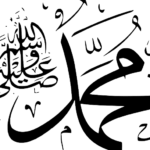 What Does the Bible Really Say About Muhammad? Unveiling the Truth
 What Does the Bible Really Say About Not Eating Meat During Lent?
ENTER >> Entertainment and Miscellaneous.
Leave a Reply